


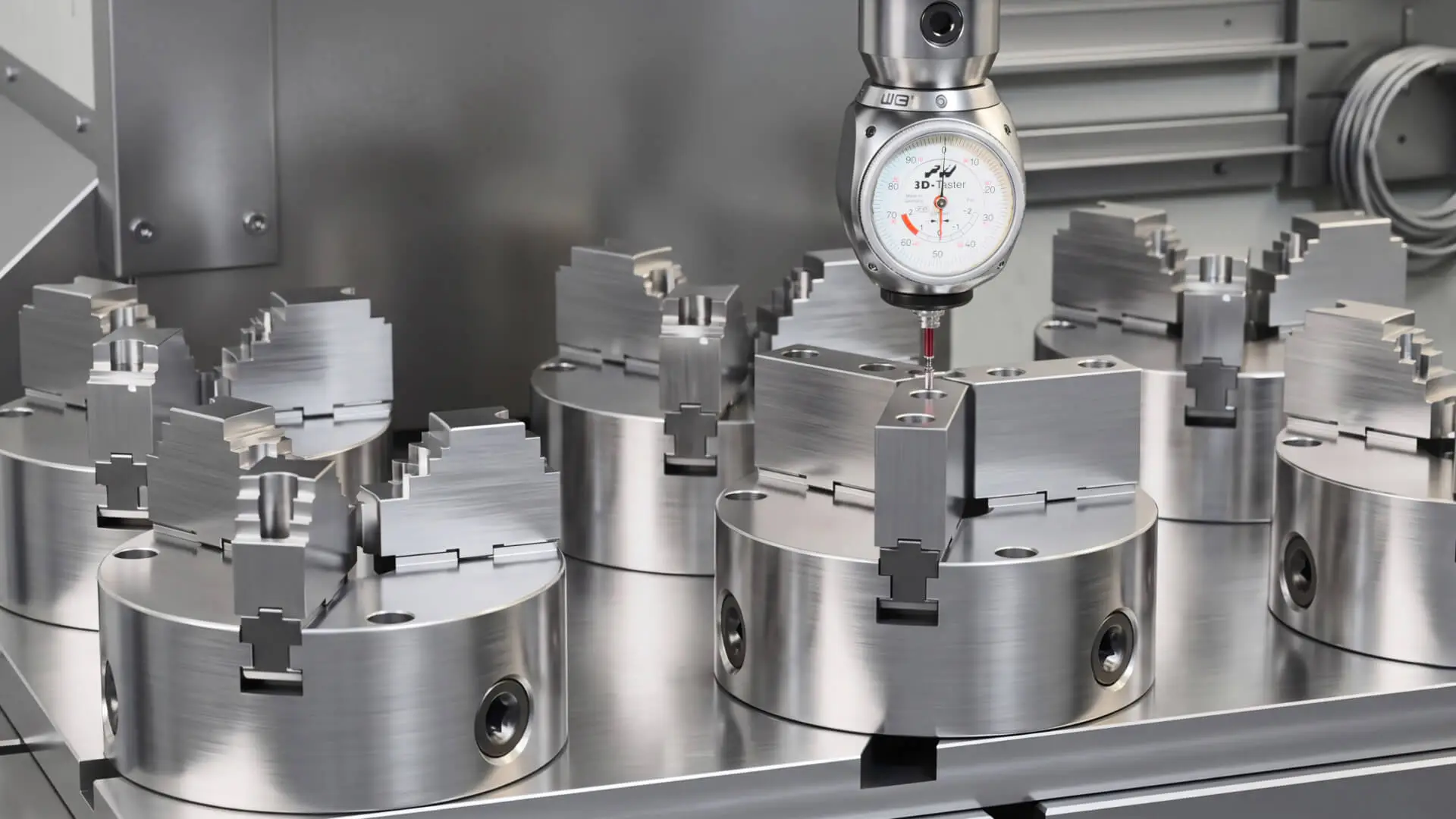


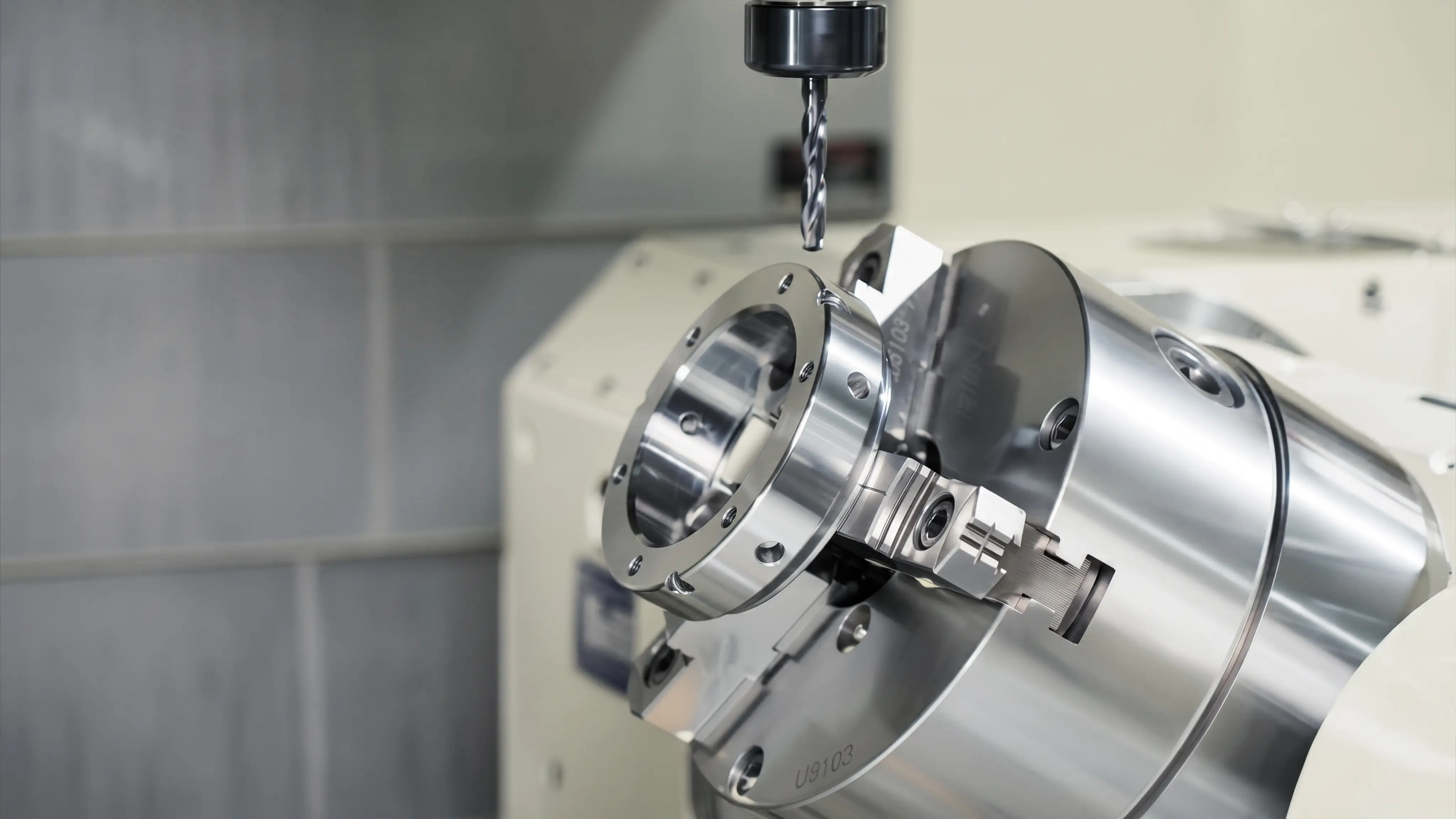
In-House Production
NIKKI's production capabilities include:
 Precision locknut machining
- Thread and contact-face grinding
- Clamping-screw contact-face grinding
- Outer-thread grinding
- Standard and custom locknut production
Keeping these processes in-house gives NIKKI direct control over dimensions, finish, and machining grade throughout production.
Materials and Range
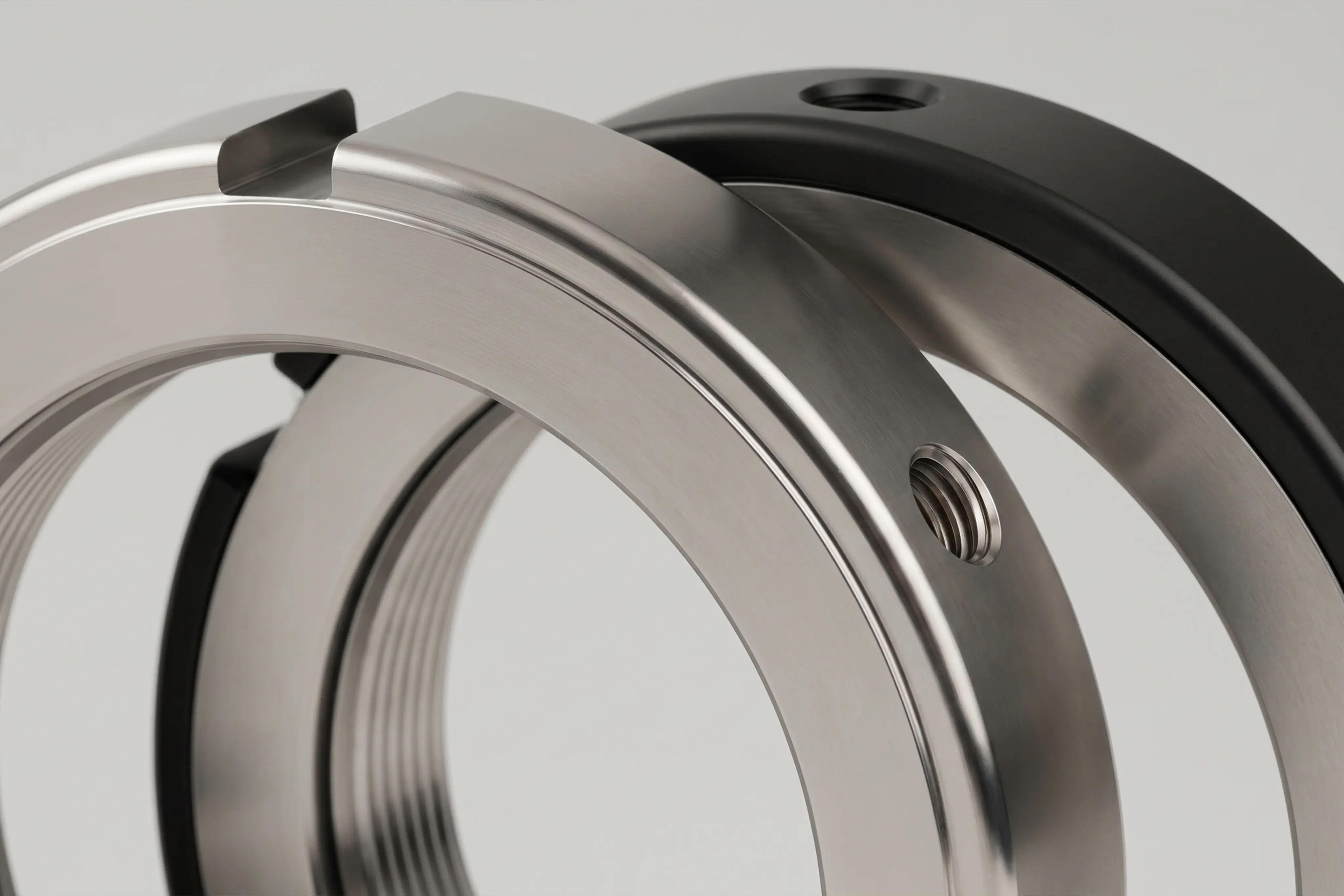
Standard and custom locknuts are produced across three machining grades for bearings, spindles, ball screws, and other precision machine components, from M5 to M260, in right-hand, left-hand, and inch threads.
- JIS SCM440 / DIN 42CrMo4 / AISI 4140, hardened to HRC 28–32 across most series
- JIS SUS304 fully stainless on the MRS series for food, pharmaceutical, chemical, and semiconductor equipment
- Thread sizes from M5 to M260, in over 600 catalogue sizes
- Left-hand threads (
-Lsuffix) and inch threads (-Usuffix) available on every series
Precision Grinding
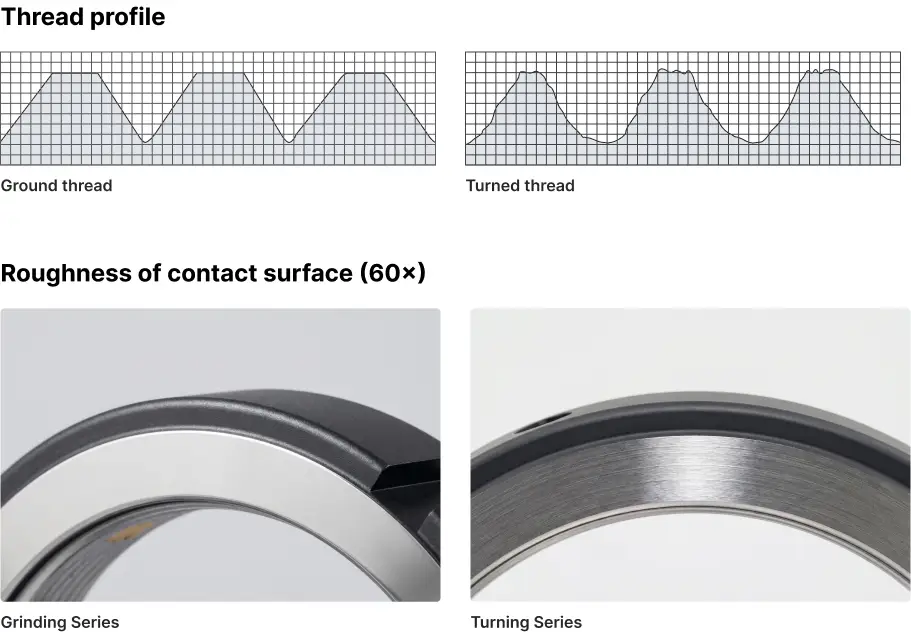
For grinding-grade locknuts, NIKKI grinds both the thread and contact face. The finished thread is held to ISO 4H precision, with maximum axial run-out of 0.002 mm.
NIKKI's grinding process targets the middle of the ISO 4H tolerance band rather than its upper limit. Once assembled, the internal and external threads meet over a larger effective contact area, which raises friction and axial force and resists unintentional loosening under rotation. The ground contact surface is correspondingly smoother than a turned face, which is what carries locking performance and dynamic rotary stability under heavy workloads.
Where the Tolerance Sits Inside ISO 4H
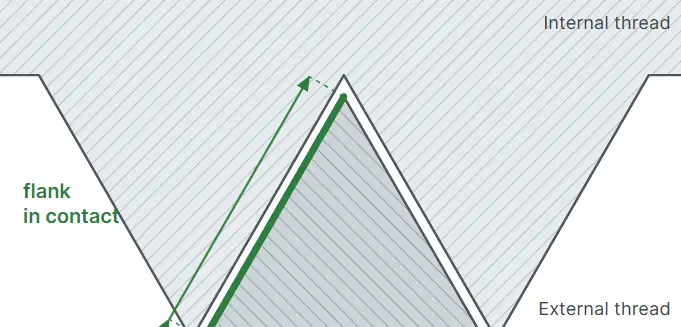
flank contact
Tolerance in the middle of ISO 4H
Flanks engage over more of their length
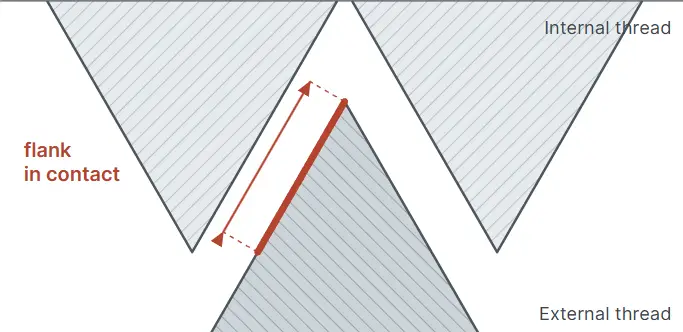
flank contact
Tolerance at the upper limit of ISO 4H
Flanks engage over less of their length
Production Grades
Grinding grade suits heavy workloads and applications requiring outstanding rigidity. Precision-turning grade suits normal workloads and standard rigidity.
Grinding grade
0.002 mm
max axial run-out
Ground thread and contact face
Series
HKF, HKR, BF, MF, TMF, MR, SR, MRRA, MA
Ground contact face
0.005 mm
max axial run-out
Ground contact face, precision-turned thread
Series
MKR, MKK, MKW
Precision-turning grade
0.005 mm
max axial run-out
Precision-turned thread and contact face
Series
BFZ, MFZ, SFZ, MRZ, SRZ, MRN, MRS
The MKR, MKK, and MKW series receive contact-face grinding where the clamping-screw through-holes would otherwise interrupt the seating surface.
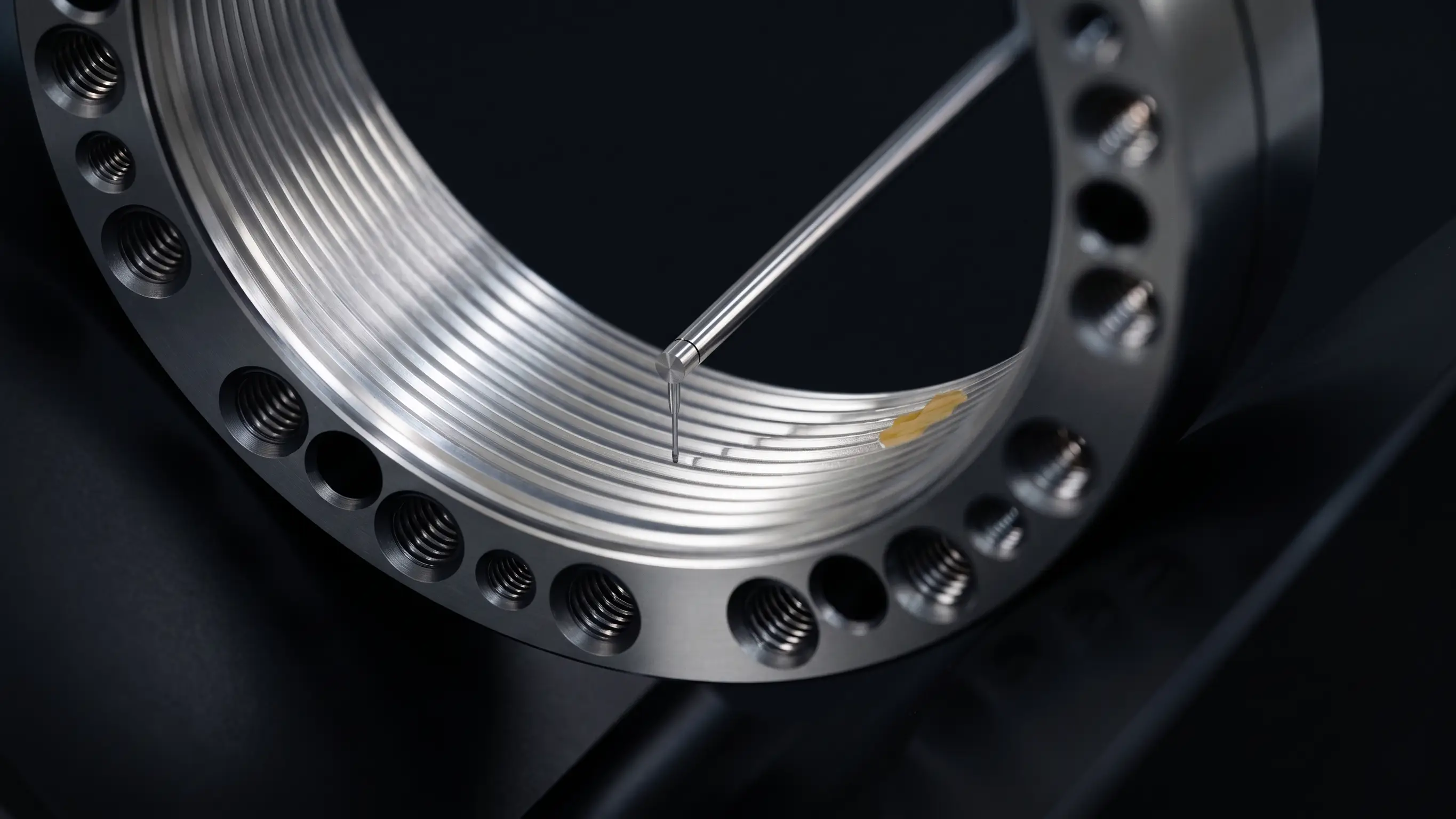
In-House Quality Assurance
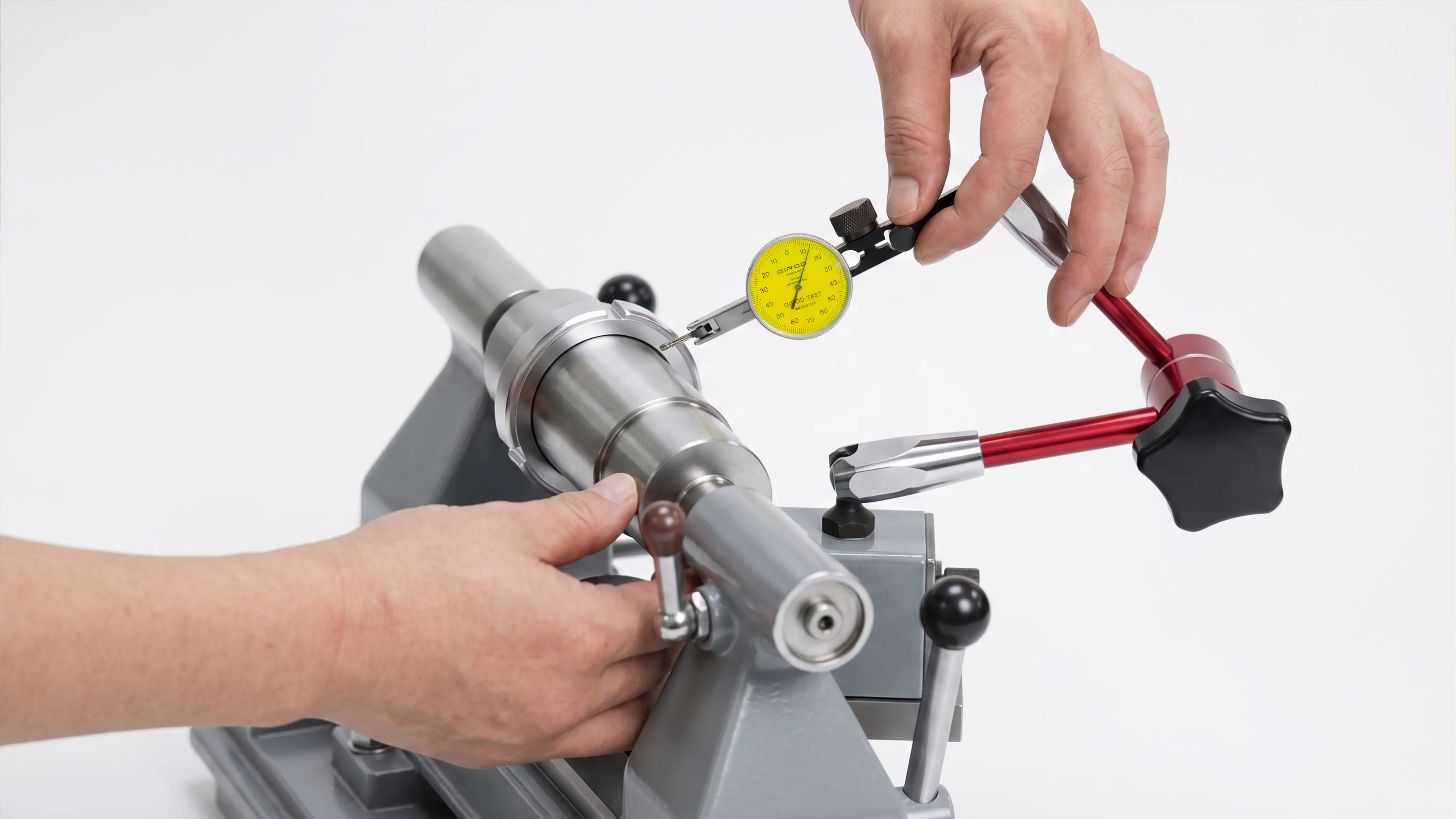
Samples from each production batch are checked in-house. Inspection covers:
- Locknut thickness
- Inner diameter
- ISO 4H thread precision, verified by gauge
- Thread run-out
- Surface roughness and contour
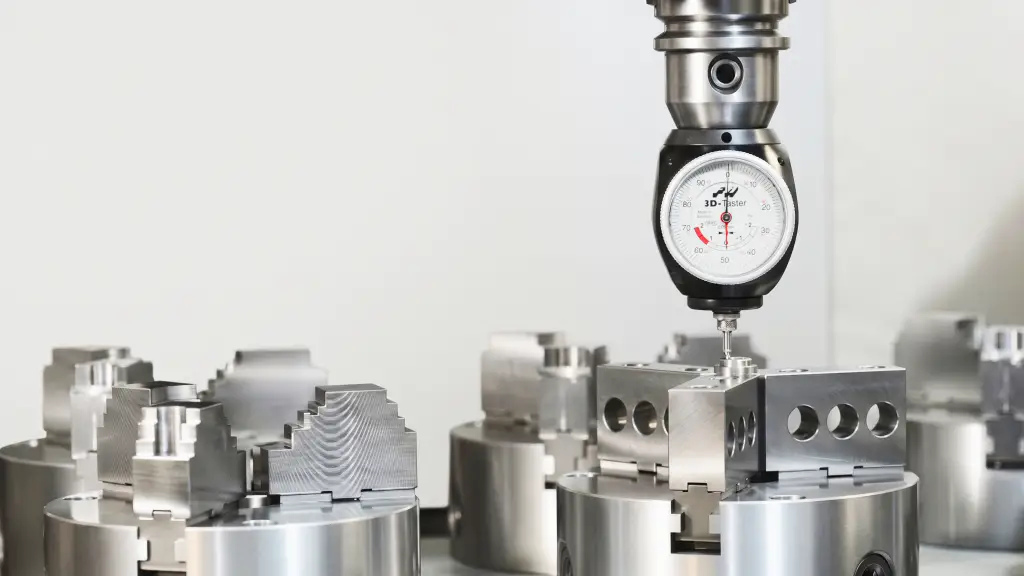
Measuring Equipment
- Universal length-measuring instrument
- Universal measuring microscope
- Roughness and contour instrument
- Thread gauges
Manufacturing controls use APQP, PPAP, FMEA, MSA, and SPC.
Product Testing Capability
Separate from batch inspection, NIKKI has equipment for product and design validation. Testing can include:
- Set-screw torque and axial-force measurement
- Locknut testing on ball screws
- Vibration-loosening testing
- Simulated spindle testing
- Temperature-controlled anti-loosening testing
Confirm the required test scope and available records with NIKKI for a specific product or customer requirement.
Custom Production
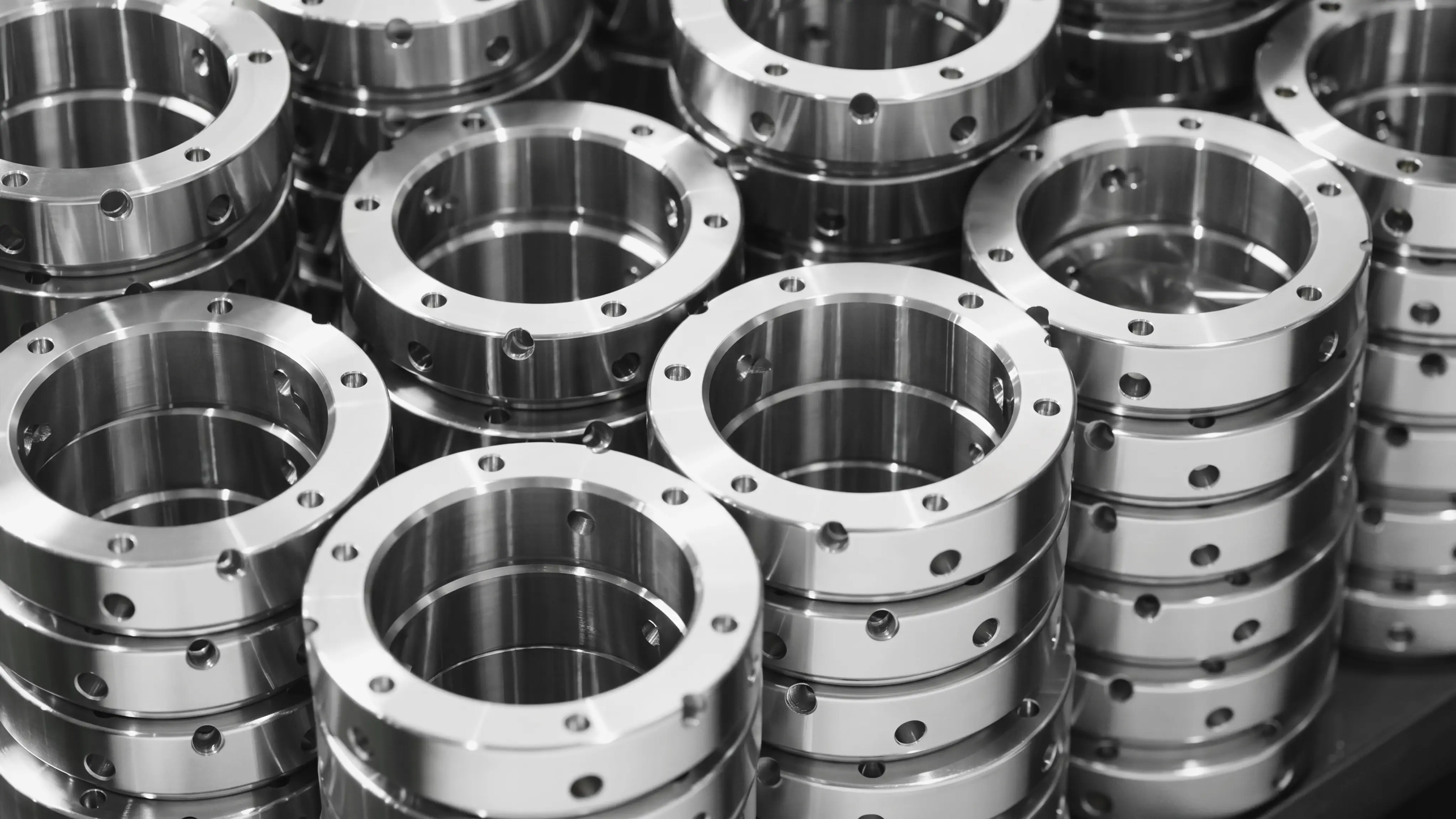
Because machining and grinding are handled in-house, NIKKI can review requirements that do not match a catalogue product. Custom work includes full-grinding locknuts, outer locknuts, internal- and external-thread designs, and ODM projects.
Send the thread specification, outside diameter, height, required run-out, locking method, material, quantity, and operating conditions. Include a drawing where available.