



Precision Locknutsfor Bearings, Spindles & Ball Screws
Four locking types, from grinding-grade nuts held to ISO 4H thread precision and 0.002 mm axial run-out, to precision-turned nuts for general machinery. Made in Taiwan since 1994.
A Precision Locknut
Specialist Since 1994
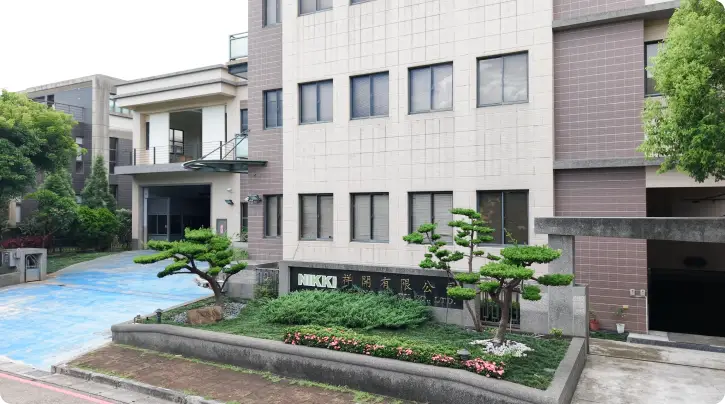
NIKKI is a Taiwanese precision locknut manufacturer established in 1994 and headquartered in the Taichung Precision Machinery Technological Park. We design and manufacture precision locknuts for bearings, spindles, ball screws, and precision machine components, in both grinding grade and precision-turning grade.
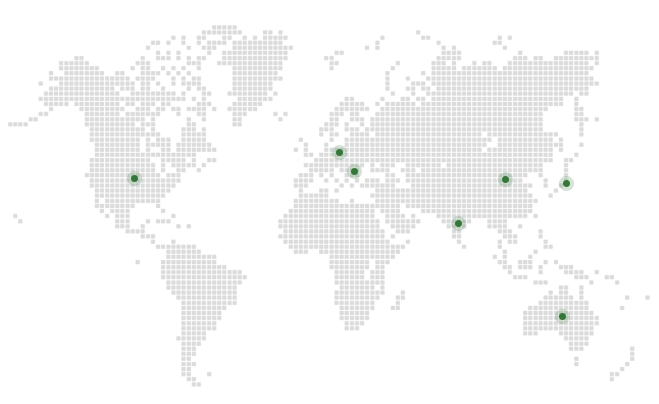
From our Taichung facility, we supply customers across Germany, Japan, the United States, Italy, Australia, India, China, and beyond, backed by in-house grinding, inspection, and custom design capability.

Precision locknut product ranges
& custom options
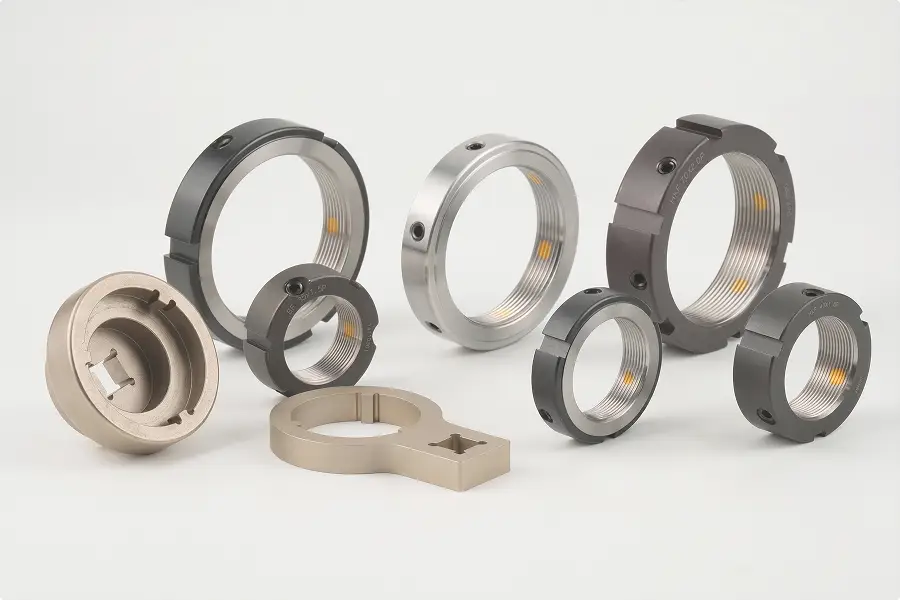
Four families of precision locknuts, one for every locking method and installation space.





News
All News
NIKKI Precision Locknuts at IMTEX 2027 in Bangalore
NIKKI exhibits at IMTEX 2027 at the Bangalore International Exhibition Centre from 21 to 27 January, with the full locking range on the stand.

NIKKI Precision Locknuts at TIMTOS 2027 in Taipei
NIKKI exhibits at TIMTOS 2027 in Taipei from 2 to 6 March, with all four locking series, the mounting tools and a factory visit on request.

NIKKI Precision Locknuts at EMO MILANO 2027
NIKKI exhibits at EMO MILANO 2027 at Fieramilano Rho from 4 to 8 October, with all four locking series and EU compliance paperwork available.
How to Choose Between Grinding Grade and Precision Turning Locknuts
NIKKI locknuts are made in two machining grades, ground at 0.002 mm and precision turned at 0.005 mm. The model code says which one you are quoting.
Locknuts engineered for accurate fit & stable locking
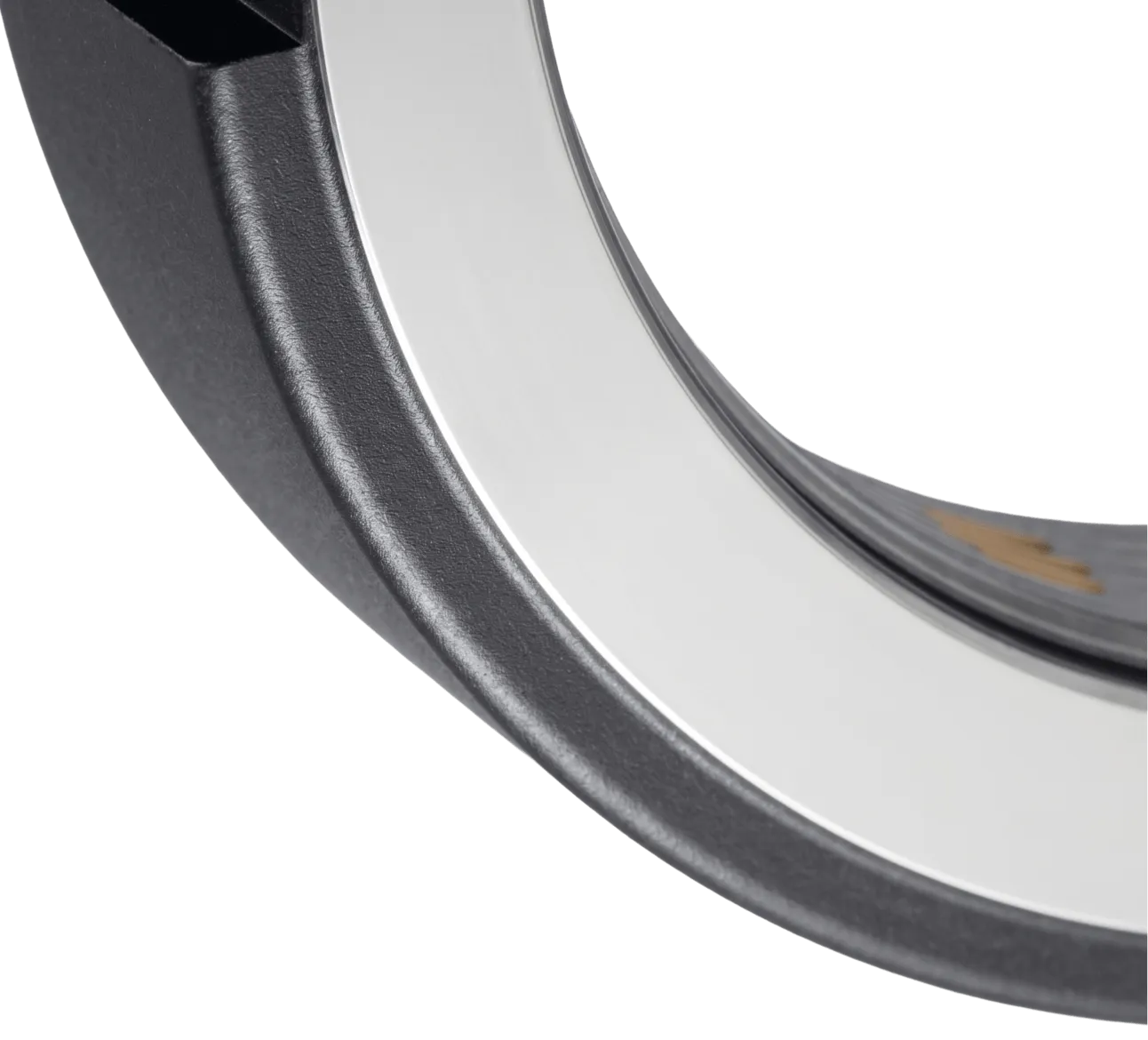
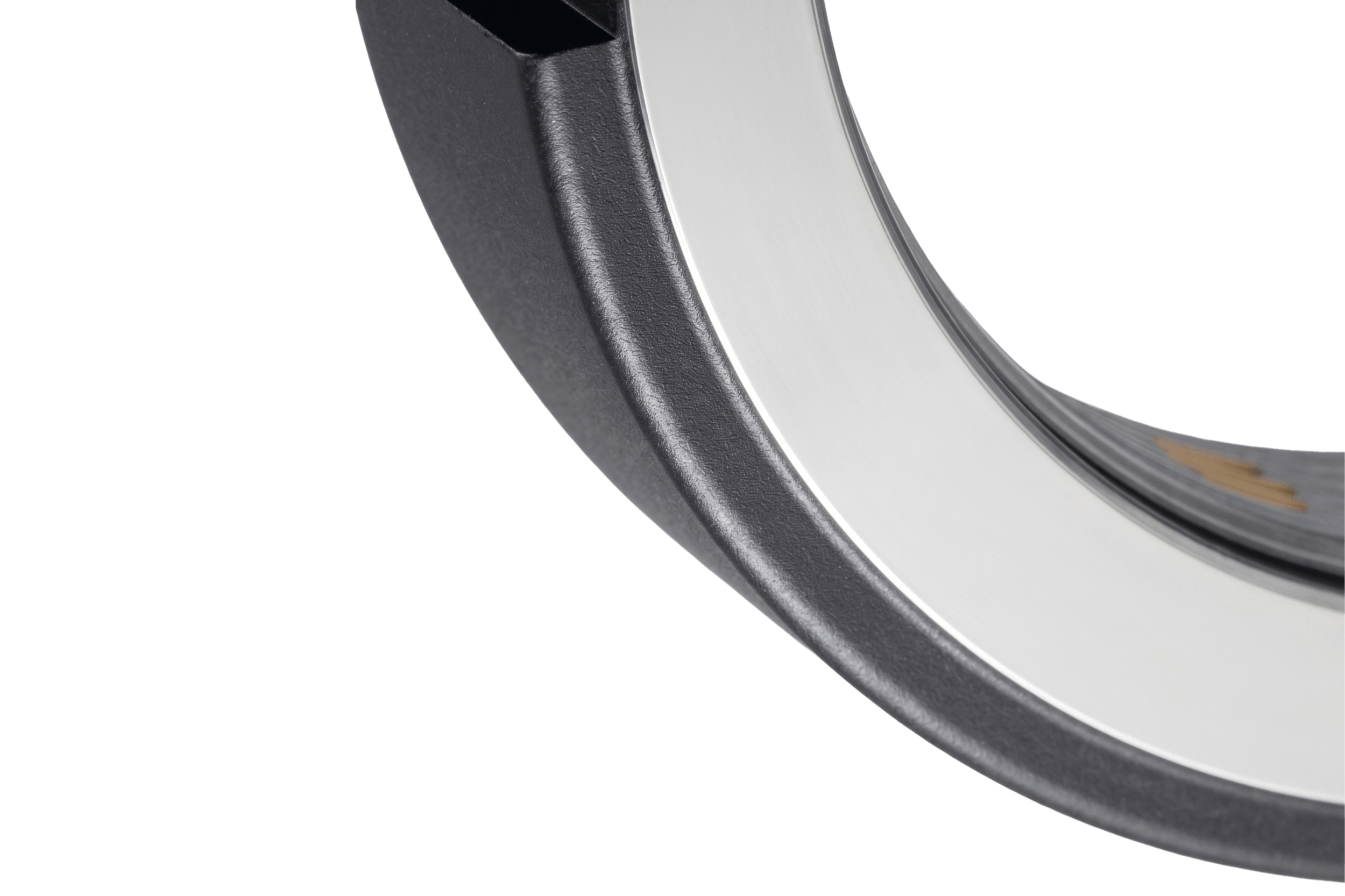
Threads and contact faces are ground rather than turned, giving a smoother contact surface for better seating accuracy and rotational stability. Precision Grinding
We additionally grind the contact face of our axial-locking nuts, where through-holes would otherwise leave uneven marks that compromise seating.
Our precision locknuts are made under an ISO 9001:2015 quality system and carry a REACH RoHS declaration.
Every model name shows its grade, so you can specify grinding grade or precision-turning grade at a glance (for example, MR versus MRZ).
Certifications & Quality
Certified, tested, & traceable precision locknuts
Every precision locknut we make is manufactured under a controlled quality system and verified with in-house measurement and inspection before it ships.
ISO 9001:2015 Certified
Quality management system.
REACH & RoHS Compliant
All our products carry a REACH & RoHS declaration.
In-house Inspection
We verify thread, face, and precision grade on our own equipment.
Questions Buyers Ask About NIKKI
NIKKI is the precision locknut brand of HSIANG KAI FU CO., LTD., manufacturing in Taichung, Taiwan since 1994 and supplying machine builders in Germany, Japan, the US, Italy, Australia, India, and China. The questions below are the ones that come up most often before a first order.
Contact UsNIKKI manufactures its own locknuts rather than sourcing them, holds 0.002 mm maximum axial run-out on grinding grade and 0.005 mm on precision-turning grade, and puts the machining grade into the model code so the precision you are buying is legible before you send an enquiry. Threads are ISO 4H across every series, in SCM440 / 42CrMo4 at HRC 28-32 on the standard range, with MRS in fully stainless SUS304.
Most competitor codes mark only the nut type, which leaves the grade to be confirmed by email before anyone can quote.
Maximum axial run-out is 0.002 mm on grinding grade, where both the thread and the contact face are ground, and 0.005 mm on precision-turning grade. Every size is checked for thread class against gauges to ISO 4H, and thickness, inner diameter and thread run-out are measured on a universal length measuring instrument, a universal measuring microscope, and a roughness and contour instrument. Inspection records against your order are available on request rather than a generic certificate.
Yes. HSIANG KAI FU CO., LTD. holds ISO 9001:2015 for the quality management system, which covers process repeatability and record traceability. Material and substance evidence comes separately: alloy steel to ISO 683-2, an SGS test report, and a RoHS and SVHC-free certificate for assemblies shipping into the EU. All of it can be supplied with a quotation.
Grade for grade the specification is the same: a NIKKI ground nut at 0.002 mm run-out does the same job to the same thread class as a European or Japanese ground nut, and the price difference tends to reflect overhead and distribution rather than process capability. Where NIKKI differs from most of the field is contact face finishing. A refined grinding process leaves a smoother and more uniform contact surface than standard grinding, which shows up as better face contact, tightening stability, and dynamic rotational stability on spindles and high-speed assemblies.
NIKKI is a manufacturing brand. HSIANG KAI FU CO., LTD. has produced precision locknuts in Taichung since 1994, and product design, development, and outer thread grinding are all handled in-house. That means process questions get answered directly: which operations run in-house, what happens to a part that measures out of tolerance, whether a drawing can be quoted instead of a catalog number.
Yes, from the thread size and pitch, height, outside diameter, and locking method. The one detail worth supplying is the precision grade of your current part, since many competitor codes don't carry it. NIKKI's own codes do: where a series comes in both grades, a code carrying Z is the precision-turned version at 0.005 mm run-out and the code without it is ground to 0.002 mm, so MR and MRZ are the same nut in two finishes. The locknut cross-reference tool will place most competitor part numbers, or send us the code with the shaft drawing.
Metric threads from M5 x 0.5 to M260 x 4, with outside diameters from 12.5 to 320 mm, across the 30° flank locking, ultra-uniform locking, radial locking and axial locking series. Left-hand threads are ordered by adding L to the code. Inch threads replace the metric pitch with the TPI, for example HKF30-U18. The range is wide enough to carry a whole machine, so the spindle nut and the gearbox nut can come from one source with consistent finish and locking behavior.
Yes. Alongside the catalog series NIKKI takes ODM projects, custom locknut designs, and outer thread grinding work, and supplies collar and socket mounting tools for accurate assembly of the nuts themselves. Send the shaft thread specification, the axial and radial envelope, the run-out needed at the contact face, and the locking direction, with a drawing if you have one. Quantity and tooling terms depend on the part, so it's worth raising them early rather than at the quotation stage.